

The persistent scent of a neighbourhood cat's visit isn't just a nuisance; it's a deliberate territorial claim that supermarket sprays simply cannot overwrite. Many UK gardeners spend their time researching how to keep deer from eating plants uk, yet for those in urban areas, the more pressing battle is often against the 13 million pet cats currently roaming our streets. It's exhausting to find your delicate flower beds disturbed and your morning routine interrupted by an unpleasant cleanup, especially when common remedies fail to deliver lasting results.
We understand that you want a clean, foul-free garden without compromising your ethical values or the safety of local animals. You shouldn't have to choose between a beautiful outdoor space and being a responsible neighbour. This guide provides the practical reassurance you need, offering a long-term solution that respects the natural behaviour of felines whilst firmly reclaiming your property.
We'll examine the psychological reasons cats choose specific spots to foul and introduce proven, humane methods to disrupt these patterns. From understanding territorial markers to applying durable, non-toxic barriers, you'll discover how to achieve peace of mind and a garden that stays pristine for the long term.
Key Takeaways
- Identify "middening" behaviour to understand why cats repeatedly choose your garden as a territorial marker rather than just a convenient litter tray.
- Explore why scent-based discouragement often outperforms physical barriers, a principle that also applies to how to keep deer from eating plants uk effectively.
- Master the essential preparation steps, including deep-cleaning affected areas to neutralise the olfactory cues that attract felines back to the same spot.
- Learn how to implement humane, professional-grade solutions that provide lasting protection without harming local wildlife or domestic pets.
Understanding Feline Territorial Behaviour in British Gardens
Cats don't choose your garden by chance; they're driven by an intricate map of scent and habit. They rely heavily on olfactory cues to define their territory and navigate their surroundings. Whilst you see a flower bed, a cat sees a series of chemical signposts that dictate where they feel safe and where they can assert authority.
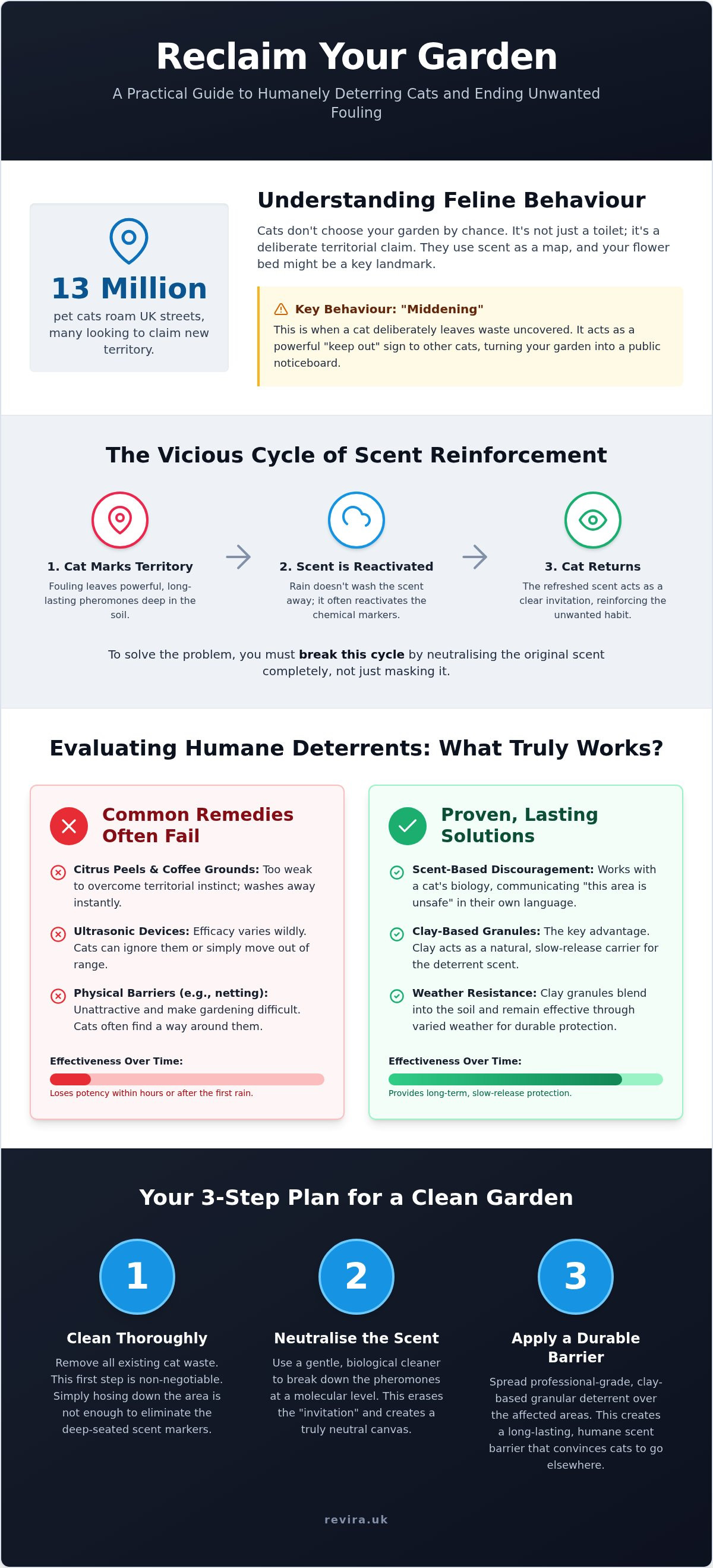
Unlike their wild ancestors who might bury waste to avoid detection, many domestic cats engage in "middening." This is a behaviour where waste is left uncovered to signal dominance to other felines in the neighbourhood. Once a spot is marked, the lingering scent acts as a permanent invitation for the cat to return. Territorial marking is the primary reason for recurring fouling.
Much like the way homeowners research how to keep deer from eating plants uk to protect their rural borders, solving an urban cat problem requires understanding the animal's biological drivers. You aren't just fighting a mess; you're fighting a deeply ingrained instinct to claim space.
Why Your Yard is Being Targeted
Cats are opportunists. Loose soil in flower beds and vegetable patches mimics the texture of a litter tray, providing a comfortable environment for their needs. They often seek out sheltered corners or areas near fences that provide a sense of safety whilst they're vulnerable. If your garden lacks a resident dog or other dominant presence, it often feels like "neutral ground," making it a prime candidate for local cats looking to expand their range.
The Cycle of Scent Reinforcement
The biggest challenge for gardeners is that standard cleaning often fails to remove the deep-seated pheromones left in the soil. These chemical markers are incredibly hardy. In fact, rain can sometimes reactivate these scent markers rather than washing them away, essentially refreshing the "invitation" to the cat.
Breaking this cycle requires a solution that does more than just irritate the animal. Effective cat deterrent methods must focus on masking these biological signals entirely. By overwriting the territorial scent, you can convince the cat that your garden is no longer a safe or desirable place to mark, leading to a long-term change in their behaviour.
Evaluating Humane Deterrents: What Truly Works?
Choosing a deterrent is often a process of trial and error. Gardeners frequently find themselves caught between wanting an effective solution and maintaining a beautiful outdoor space. Physical barriers like chicken wire or prickly mats can be effective but often ruin the garden aesthetic. Whilst they prevent digging, they also make routine weeding and planting far more difficult for the homeowner.
Ultrasonic devices are a popular choice, but their efficacy varies wildly depending on the cat's age and hearing range. Scent-based deterrents remain the most natural way to communicate "keep out" to a visiting cat without creating an eyesore or a physical trip hazard. Household remedies like lemon peel usually lose their potency within hours as the essential oils evaporate.
Why Traditional Household Remedies Often Fail
Citrus peels and coffee grounds are too weak to overcome a cat's established territorial instinct. Water bottles and mirrors rely on a visual startle, which cats quickly learn to ignore once the novelty wears off. Most DIY solutions require constant reapplication, especially after a typical British downpour that quickly dilutes the surface scent. This creates a cycle of maintenance that most busy gardeners find impossible to sustain.
The Advantage of Clay-Based Granules
Clay-based granules provide a slow-release scent that persists much longer than liquid sprays or powders. Clay acts as a natural carrier that blends into the soil whilst maintaining the deterrent signal. This method targets the cat's olfactory senses without using harmful chemical pesticides. It's a grounded, ethical approach that prioritises the safety of all animals involved.
Just as those looking for how to keep deer from eating plants uk find success with biological discouragement, cat owners benefit from a solution that works with nature rather than against it. By using a durable, clay-based carrier, you ensure the protection remains active through varied weather conditions, providing the long-term peace of mind you deserve.
Implementing a Long-Term Solution for a Clean Garden
Reclaiming your garden starts with a thorough reset of the environment. Before applying any deterrent, you must remove existing waste and neutralise the soil. Simply hosing the area is rarely enough because you're dealing with persistent pheromones that signal safety to a cat. Use a gentle, biological cleaner to break down these compounds at a molecular level, ensuring the "all-clear" signal is truly gone.
Once the area is clear, apply a professional-grade deterrent that focuses on biological discouragement. This isn't about causing pain; it's about making the environment scent-unfriendly. Monitor your garden's perimeter regularly. Cats are habitual and often enter through the same gaps in hedges or broken fence panels. Closing these transit routes whilst applying scent markers creates a double layer of protection.
Consistency is key to re-training a cat that your garden is no longer their territory. This methodical approach is similar to the patience required when learning how to keep deer from eating plants uk. You're establishing a new boundary that the animal must learn to respect. Once the cat realises the scent isn't fading, they'll seek a new, less challenging territory elsewhere.
The Revira Approach to Garden Protection
Our granules are designed to be scattered easily amongst flower beds and borders. This application method is a cornerstone of our wider expertise, including our guidance on how to keep deer from eating plants uk, ensuring your entire garden remains protected. By using a non-toxic formula, we ensure your outdoor space remains safe for pets and children. You can learn more about our humane protection strategies for various garden visitors to see how we manage wildlife without harsh chemicals.
Maintaining a Cat-Free Outdoor Space
A tidy garden is naturally less attractive to roaming felines. Keep your lawn mown and borders tidy to reduce the feeling of "wild" cover that cats seek for safety whilst navigating the neighbourhood. You might also consider planting "scaredy cat" plants (Coleus canina) alongside your deterrent for a multi-sensory approach. For more specific advice on larger visitors, see our guide on how to keep badgers out to maintain a balanced, peaceful space.
Reclaiming Your Garden with Confidence
Protecting your outdoor space requires a shift from temporary scares to a long-term, biological approach. By understanding that cats are driven by territorial scent markers, you can effectively disrupt their habits through consistent, humane intervention. A clean garden isn't just about hygiene; it's about restoring the peace of mind you deserve whilst ensuring the safety of visiting animals.
Our clay-based granules are non-toxic and chemical-pesticide free, providing a durable solution that survives the unpredictable British weather. Homeowners managing urban felines or researching how to keep deer from eating plants uk find that the secret lies in clear, scent-based communication that respects the natural world. Our team of trusted UK wildlife experts has perfected a formula that prioritises efficacy and ethical responsibility.
You don't have to tolerate daily mess or ruined flower beds any longer. Browse our humane deer and cat deterrent range to reclaim your garden with a proven, specialist solution. With the right tools and a little persistence, your outdoor space will once again be a clean, welcoming sanctuary for you to enjoy.
Frequently Asked Questions
How do I stop cats from pooping in my garden for good?
To stop cats pooping in your garden for good, you must first neutralise existing scent markers and then apply a long-lasting biological deterrent. Cats are creatures of habit; they return to spots that smell like their territory. By using clay-based granules that mask these pheromones, you break the cycle of return visits. Consistency is vital during the first few weeks to re-train the animal to avoid your borders permanently.
What smell do cats hate to stop them pooping?
Cats have a highly sensitive sense of smell and generally avoid pungent scents like citrus, eucalyptus, and lavender. However, household items like lemon peel often lose their potency too quickly to be effective. Professional deterrents use concentrated biological signals that communicate a "keep out" message more effectively. This approach is similar to how to keep deer from eating plants uk, where natural scent barriers are used to protect delicate vegetation without resorting to harsh chemicals.
Are cat deterrent granules safe for my own dog?
Yes, professional clay-based deterrent granules are formulated without chemical pesticides or poisons, making them safe for your own dog to be around. Unlike some liquid sprays that can be irritating to a pet's paws or skin, these granules are grounded in natural origins. They focus on discouragement through scent rather than physical harm. This ensures your garden remains a safe environment for your own pets whilst effectively discouraging uninvited neighbourhood felines.
How often do I need to reapply deterrent granules in the UK?
You generally need to reapply the granules every few months to maintain a strong scent barrier. Whilst the clay-based formula is designed to be durable, heavy British rain can eventually wear down the potency of the scent markers. We recommend a fresh application every three to six months for optimal results. If you are also managing larger visitors and looking for how to keep deer from eating plants uk, regular monitoring of your garden's perimeter will help you decide when a top-up is necessary.